


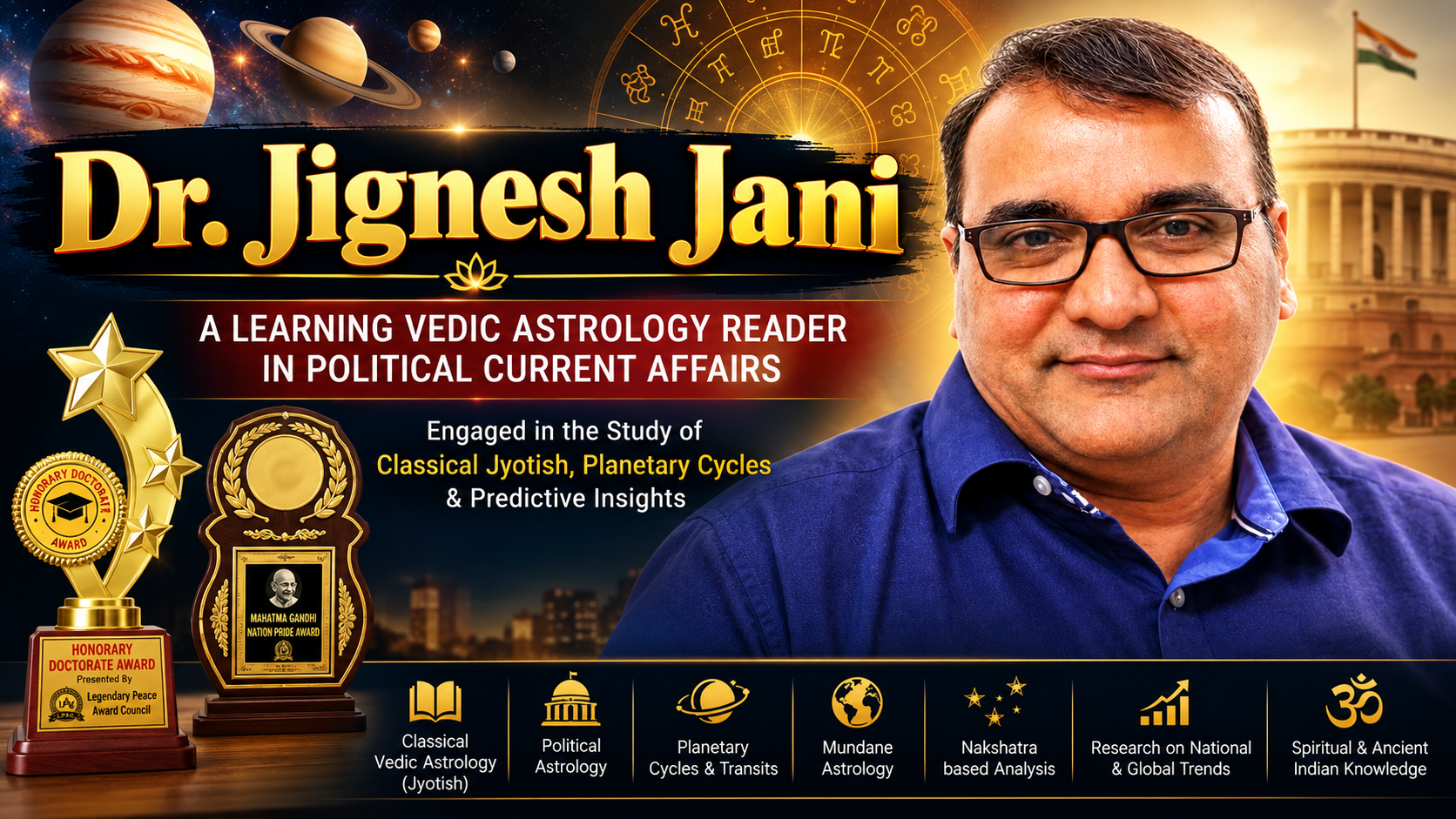
By Dr. Jignesh Jani
The world is passing through a period of growing uncertainty, where conflicts, political rivalries, and security tensions in different regions continue to challenge global peace. From the ongoing Russia–Ukraine conflict to rising tensions involving the United States, Iran, and Israel, international instability has created concerns about security, economic disruption, and humanitarian suffering.
In such a difficult environment, one fundamental truth remains clear: war cannot be the permanent solution to human disagreements. History has shown that military victories rarely create lasting peace. Sustainable stability is achieved through dialogue, diplomacy, negotiation, and mutual understanding between nations.
The consequences of modern conflicts extend far beyond battlefields. The Russia–Ukraine war has affected millions of people, causing loss of life, displacement, economic uncertainty, and disruption of global supply chains. Similarly, any escalation in the Middle East carries the potential to affect regional security, energy markets, and international relations.
The greatest cost of war is always paid by ordinary people. Civilians who have no role in political disputes often become victims of violence. Families lose loved ones, children lose access to education, healthcare systems struggle, and communities face years of recovery after conflicts end.
Beyond the human tragedy, wars also create serious environmental consequences. Military activities can damage ecosystems, pollute water resources, increase carbon emissions, and create long-term environmental challenges. At a time when the world is already addressing climate change and ecological concerns, additional conflicts make these challenges even more difficult.
The international community must recognize that peace requires greater investment in diplomacy rather than endless preparation for conflict. The enormous resources spent on weapons and military operations could instead support education, healthcare, innovation, poverty reduction, and sustainable development.
Major nations and global institutions have a responsibility to encourage negotiations, humanitarian cooperation, and peaceful solutions. Supplying weapons may increase military strength, but only dialogue can create lasting understanding between opposing sides.
India’s ancient philosophy of “Vasudhaiva Kutumbakam”—the world is one family—reminds humanity that global challenges require collective solutions. In today’s interconnected world, no nation remains completely isolated from the consequences of conflict.
The future of humanity depends on responsible leadership and peaceful cooperation. The world does not need more weapons; it needs more wisdom, compassion, and commitment to dialogue. True strength lies not only in the ability to fight but in the courage to choose peace.